Geometric Border Review
As an embroidery designer with years of experience, I’ve seen countless machine embroidery designs come and go. But Geometric Border stands out as a versatile and modern option for small business merch, custom apparel, and branded patches. Its clean lines and structured pattern offer a professional yet approachable feel that can elevate any project.
First Impressions: A Modern, Versatile Design
From the moment I laid eyes on Geometric Border, it felt like a design that could work in multiple settings. The title alone suggests something sleek and contemporary, and the description reinforces that idea—highlighting its ability to make fabric look "sweet and modern." This design doesn’t scream bold or flashy, but it exudes a quiet confidence that makes it ideal for businesses looking to maintain a polished image.
Whether you're targeting a boutique, a café, or a handmade shop, Geometric Border has the potential to fit into a variety of brand identities. It’s not overly decorative, which means it won’t overwhelm smaller items like apron embroidery or cap embroidery. Instead, it adds a subtle touch of sophistication that can enhance product value without being distracting.
Real Business Use: From Patches to Tote Bags
One of the strongest aspects of Geometric Border is its adaptability. As a machine embroidery design, it works well across different mediums, making it a great choice for small business merch. For example, embroidered patches featuring this design can be used as chest logos on uniforms, sleeve details on work shirts, or even as a mark on tote bag design.
When considering branded merchandise, Geometric Border offers visual consistency that can help reinforce brand identity. Whether it's a bakery using it on aprons or a florist adding it to customer gifts, the design provides a cohesive look that feels intentional and high-quality.
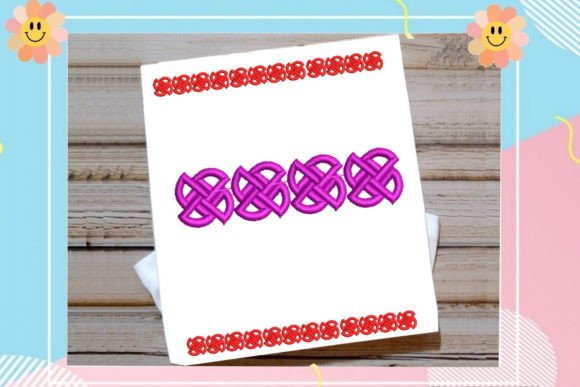
This design also shines in commercial embroidery projects. It’s suitable for custom apparel, event merch, and Etsy branding, especially when paired with the right thread colors. The geometric elements allow for creative color blocking, making it easy to match with existing brand palettes or create new ones.
Where to Use With Caution
While Geometric Border is a strong design, there are some scenarios where it may not perform as well. For instance, if you're planning to use it on small patch sizes, the detail might get lost. Similarly, on curved surfaces like cap fronts, the sharp angles could appear distorted unless properly adjusted during digitizing.
High stitch density can also be an issue if not managed carefully. If the design is too dense, it may cause puckering or damage to the fabric, especially on textured materials. Dark uniforms may require a contrast in thread colors to ensure visibility, and frequent washing could affect the longevity of the embroidery if proper stabilizer is not used.
Design Assets and Commercial Use
Before finalizing any project, it's essential to test Geometric Border in black and white first. This helps assess how it looks on different fabrics and ensures that the spacing and proportions are correct. Checking the design at small patch size is also crucial—especially if it will be used on items like product packaging accents or wearable labels.
As a designer, I always recommend reviewing the hoop size and confirming that the design fits within your embroidery machine’s capabilities. Proper stabilizer use is another key factor, especially when working with delicate or stretchy fabrics. Creating a printable mockup before production can also save time and prevent costly mistakes.
Impact on Brand Identity and Customer Trust
Geometric Border has the potential to significantly impact brand identity. When used consistently across merchandise, it creates a sense of professionalism and reliability that customers can recognize. This is especially important for handmade products or small business merch, where visual consistency can make a big difference in customer perception.
By incorporating this design into your custom apparel or branded patches, you’re not just adding a visual element—you're reinforcing your brand’s values. Whether you're aiming for a modern, elegant, or playful vibe, Geometric Border can help you achieve that look without overcomplicating the design.
Practical Tips for Embroidery Designers
As someone who regularly works with digital embroidery files, I’ve learned a few key tips that can help maximize the effectiveness of Geometric Border:
- Test in black and white: This helps identify any issues with spacing or proportion.
- Check small patch size: Ensure the design remains recognizable when scaled down.
- Review thread color contrast: Make sure the design stands out against the fabric.
- Inspect spacing: Avoid overcrowding, especially on detailed areas.
- Confirm hoop size: Ensure the design fits within your machine’s limits.
- Test on real fabric: This helps identify any potential issues before mass production.
- Use proper stabilizer: This prevents puckering and ensures a clean finished product.
- Create a mockup: Show clients the design in context before finalizing.
- Compare with other design assets: Ensure it complements your existing branding.
- Confirm commercial licensing: Always verify that the embroidery file is suitable for business use.
Conclusion: A Smart Choice for Small Businesses
Geometric Border is more than just a pretty design—it's a practical tool for small business owners, embroidery shops, and crafters looking to elevate their product offerings. Its clean, modern aesthetic makes it adaptable to a wide range of applications, from apron embroidery to tote bag design.
With careful consideration and proper execution, this machine embroidery design can become a valuable part of your brand’s visual language. Whether you're creating custom apparel, branded patches, or promotional merchandise, Geometric Border offers a professional and consistent look that can help build trust and recognition among your customers.